PREVIOUSNEXT


Quarterly tribute:
Creative Change in EU Project Management
- tlab
- 03/06/2025
- 10:10 AM
- 0 comments
Integrating Green Practices in EU Project Management
Transform your EU project management approach with proven green strategies. From €95.5 billion Horizon Europe compliance to carbon footprint measurement, master sustainable practices that ensure funding success while delivering measurable environmental impact and regulatory excellence.

1. Understanding Green EU Project Management - Key Terms & Concepts
Q: What defines green project management in the EU context?
A: Green project management encompasses environmental sustainability integration throughout the entire project lifecycle, from conception to closure. The European Commission defines this through its PM² methodology, which incorporates three sustainability pillars: economic, environmental, and social responsibility.
Q: Which EU funds require sustainability considerations?
A: Major funding streams including Horizon Europe (€95.5 billion), European Regional Development Fund (ERDF), European Social Fund Plus (ESF+), and European Agricultural and Rural Development Fund (EARDF) all mandate sustainability integration.
Q: What is Environmental Impact Assessment (EIA)?
A: EIA is mandatory under EU Directive 2011/92/EU for major projects including nuclear stations, railways, motorways, and waste disposal facilities, assessing impacts on population, biodiversity, climate, and cultural heritage.
Q: How does Green Public Procurement (GPP) affect project management?
A: GPP requires procuring goods and services with reduced environmental impact throughout their lifecycle, supporting the EU’s resource-efficient economy goals while remaining voluntary for member states.

2. The European Green Deal Framework and Funding Requirements
The European Green Deal represents the EU’s most ambitious climate action plan, directly influencing project management through multi-billion euro funding mechanisms. Horizon Europe’s €95.5 billion budget prioritizes climate change mitigation, supporting UN Sustainable Development Goals achievement. The Framework Programme’s three pillars systematically integrate sustainability: Pillar I strengthens science excellence, Pillar II addresses global challenges with up to 100% funding for research actions, and Pillar III supports innovation implementation. Regional funds totaling €350 billion specifically target sustainable development in regions like the Carpathians, with regulation §17 mandating that “objectives shall be pursued in the framework of sustainable development”. Project managers must align proposals with Policy Objective 2 (greener, low-carbon Europe) and demonstrate measurable contributions to climate neutrality targets. The Creative Europe MEDIA programme exemplifies this commitment, allocating €650,000 for developing standardized carbon emissions calculators across the audiovisual sector.

3. Mandatory Environmental Assessments and Regulatory Compliance
Environmental Impact Assessment compliance represents the cornerstone of EU project sustainability requirements. Under Directive 2011/92/EU, amended by 2014/52/EU, major infrastructure projects must undergo comprehensive environmental evaluation before commencement. The assessment framework examines direct and indirect impacts across multiple dimensions: population health, biodiversity conservation, land use, soil quality, water resources, air quality, climate effects, landscape preservation, material assets, and cultural heritage protection. Project developers must provide detailed documentation including project descriptions, potential significant effects, reasonable alternatives analysis, and specific mitigation measures for environmental impact offset. WWF’s sustainability checklist provides practical guidance, covering €350 billion in regional funds to ensure compliance with EU environmental legislation and sustainable development requirements. The assessment process guarantees environmental protection transparency while facilitating public participation in decision-making. Project managers failing to complete proper EIA procedures face significant delays, funding withdrawal, and legal challenges, making early sustainability integration essential for project success.

4. Implementing PM² Methodology for Sustainable Project Outcomes
The European Commission’s PM² methodology provides a comprehensive framework integrating sustainability considerations into every project management phase. This official methodology distinguishes between “green projects” (explicitly designed for positive environmental impact) and “greening projects” (incorporating sustainability goals into broader project scopes). The three sustainability dimensions—economic, environmental, and social—form the foundation for responsible project execution. PM² facilitates systematic “green by design” implementation, ensuring sustainability considerations influence all project decisions from procurement to resource management. The methodology aligns with the European Green Deal and Just Transition Fund requirements, supporting multi-billion euro climate action initiatives. Project managers utilizing PM² demonstrate thought leadership through evidence-based sustainability integration, moving beyond buzzword compliance to measurable environmental outcomes. Implementation requires stakeholder engagement across the sustainability spectrum, incorporating circular economy principles and climate adaptation strategies. Success metrics include quantifiable environmental improvements, stakeholder participation rates, and long-term impact sustainability. The framework ensures projects contribute meaningfully to EU policy objectives while maintaining operational efficiency and budget compliance.

5. Green Public Procurement and Sustainable Funding Strategies
Green Public Procurement (GPP) fundamentally transforms how EU project managers approach resource acquisition and vendor selection. Defined as “a process whereby public authorities seek to procure goods, services and works with a reduced environmental impact throughout their life cycle,” GPP supports the EU’s resource-efficient economy transition. While voluntary, GPP implementation significantly influences project success rates and funding accessibility. The framework emphasizes three critical elements: service provision over product purchasing, comprehensive lifecycle consideration from design to disposal, and enhanced market dialogue facilitation. EU GPP criteria are regularly updated incorporating scientific data, technological advances, and market developments, available in all official languages. Core criteria suit any contracting authority across member states, addressing key environmental impacts with minimal verification burden. Comprehensive criteria target best environmental products available, potentially requiring additional verification or slight cost increases. Project managers implementing GPP demonstrate strategic procurement excellence, accessing preferential funding rates while supporting EU sustainability goals through measurable environmental impact reduction.
6. Carbon Footprint Measurement and Digital Monitoring Tools
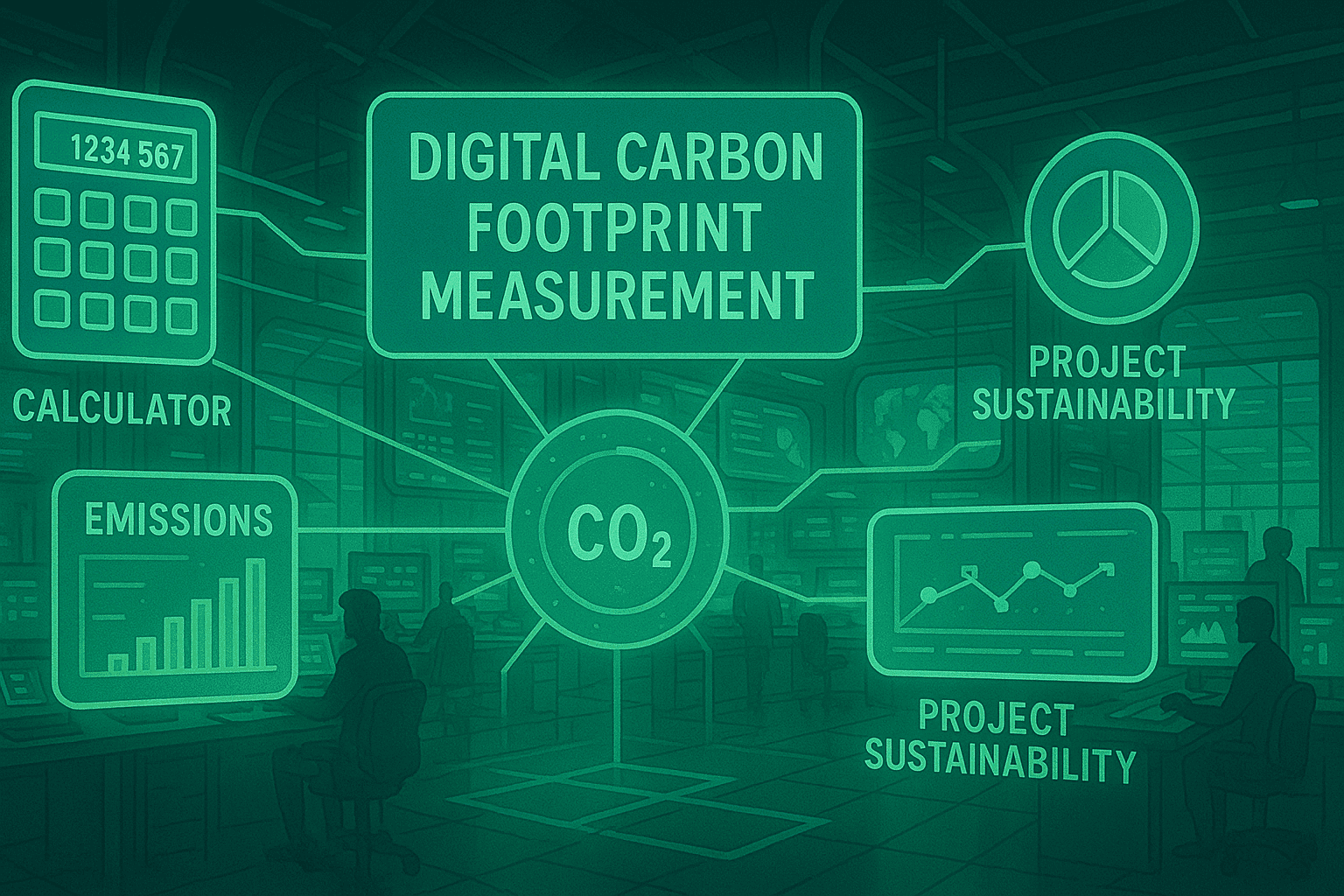
Advanced carbon footprint measurement tools are revolutionizing EU project sustainability tracking and compliance verification. The European Commission’s €650,000 investment in standardized carbon emissions calculators for the audiovisual sector exemplifies systematic approach to environmental impact quantification. GREEN ADVISOR project, spanning three years across Iceland, Spain, Italy, Turkey, and Finland, develops comprehensive self-assessment tools for measuring environmental footprints in Erasmus+ projects. The initiative creates multilingual calculators and orientation tools encouraging educators to acquire green transition competencies while implementing concrete compensation measures for pollution impact. GreenEURproject’s €250,000 Erasmus+ funded initiative develops environmental impact calculators and green labeling systems for EU projects, providing first-of-its-kind sustainability assessment frameworks. These digital tools enable project managers to quantify environmental metrics, identify mitigation opportunities, and demonstrate measurable progress toward climate neutrality targets. Implementation facilitates transparent reporting, supports policy-making decisions, and ensures alignment with EU-wide Key Performance Indicators linked to the Green Deal objectives.
7. Long-term Sustainability and Strategic Exploitation Planning
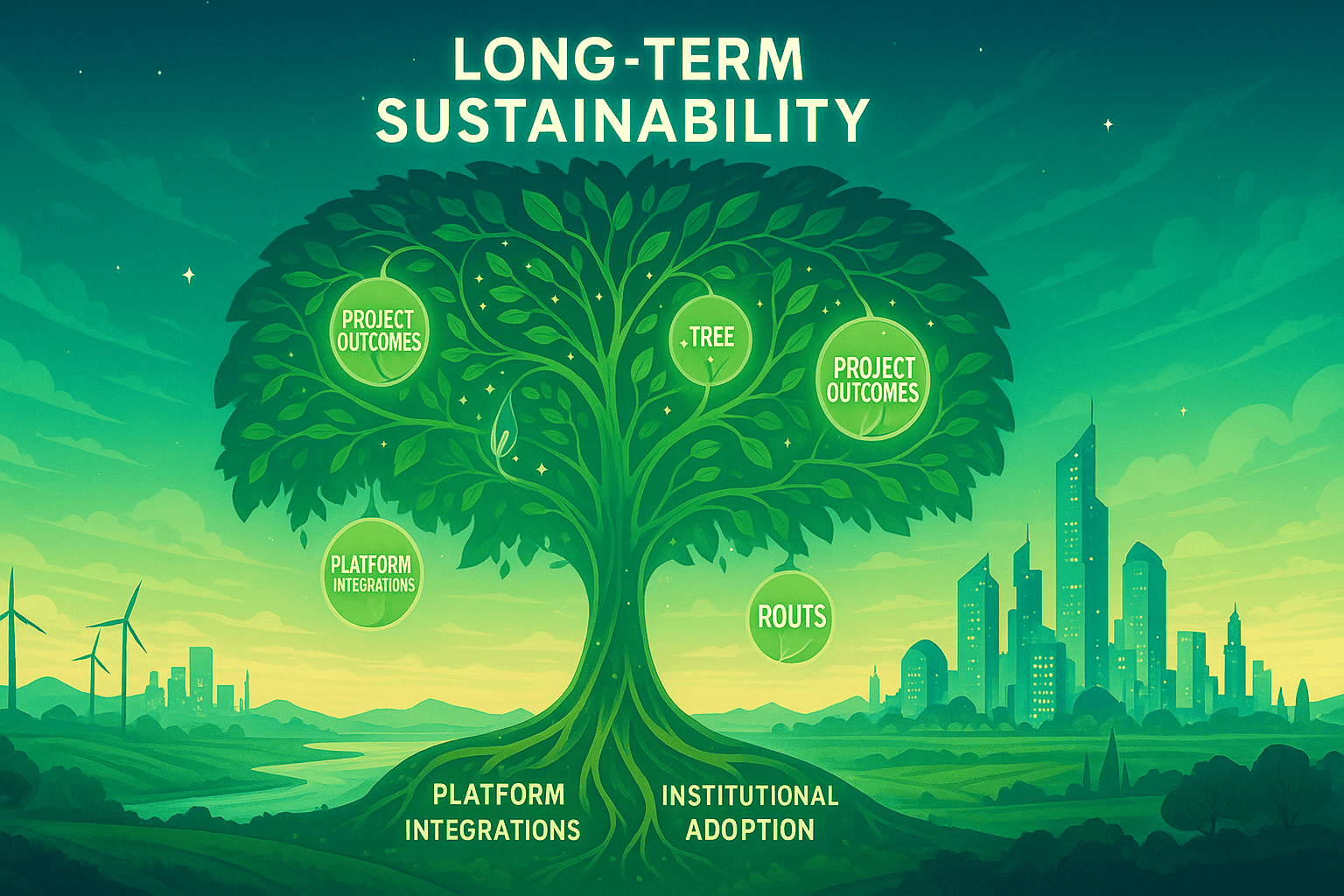
Sustainable exploitation strategies ensure EU project outcomes generate lasting environmental and economic value beyond funding periods. The REGILIENCE project demonstrates systematic four-step sustainability planning: preliminary strategy identification during proposal phase, comprehensive review and analysis of previous project strategies, internal consultation with partners for asset identification, and continuous monitoring with periodic updates. Long-term sustainability requires integration with Climate-Adapt and MIP4Adapt platforms, fostering solution uptake across European institutions and stakeholders. Project managers must establish clear exploitation commitments extending beyond project conclusion, ensuring developed tools and methodologies remain accessible through platforms like Zenodo and UNFCCC Adaptation Knowledge portal. The sustainability framework emphasizes solution amplification rather than marketability, focusing on institutional adoption and stakeholder engagement. Success metrics include partnership continuity, platform integration achievements, and measurable policy influence. Effective exploitation strategies leverage sister project collaborations, creating synergistic opportunities for climate innovation advancement. Project managers implementing comprehensive sustainability planning demonstrate leadership in responsible innovation while maximizing EU investment returns through enduring environmental impact.